Revolut Launches AI Research Lab Built Around Pragma Model
Aug 30, 2026
FinTech
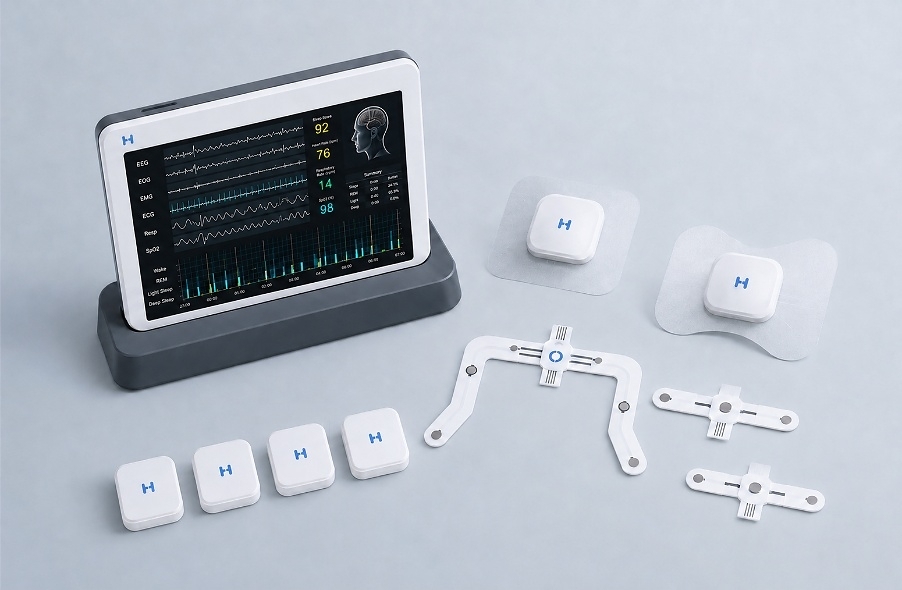
HoneyNaps announced in a press release that it has developed a wireless polysomnography system using four skin patches and AI analysis. The head, chest, body, and leg sensors consolidate functions typically handled by more than 24 wired sensors.
The patches collect EEG, EOG, ECG, EMG, respiratory airflow, blood oxygen saturation, body position, and physical activity data. HoneyNaps' SOMNUM software analyzes the data for sleep stages, apnea events, arousals, and periodic limb movements.
The system includes flexible circuitry, an analog to digital converter, wireless noise reduction, electrostatic discharge protection, and a low power design. Its edge computing functions support real time processing and connections to centralized hospital systems, with possible use in home sleep testing and remote monitoring.
Consider subscribing to one of our newsletters like Life AI Weekly or Daily AI Brief.
Also, consider following us on social media:
Weekly coverage of AI applications in healthcare, drug development, biotechnology research, and genomics breakthroughs.


 Tensordyne
This Tensordyne whitepaper presents Napier, an inference-focused AI processor and rack-scale system based on the company’s TDN Math logarithmic number system. It examines infrastructure requirements for large mixture-of-experts and agentic models, compares major inference architecture approaches, and details the TDN AIP processor, TDN72 pod, TDN Link fabric, and Napier Ultra configuration. The paper reports simulation-based performance, cost, and accuracy-validation results, including Tensordyne’s projected comparison of one Napier rack with a nine-rack Nvidia Rubin plus Groq deployment; the chip is reported as taped out and in fabrication.
Read more