Corbenic AI launches Galahad beta for secure AI memory
Oct 01, 2026
Cybersecurity
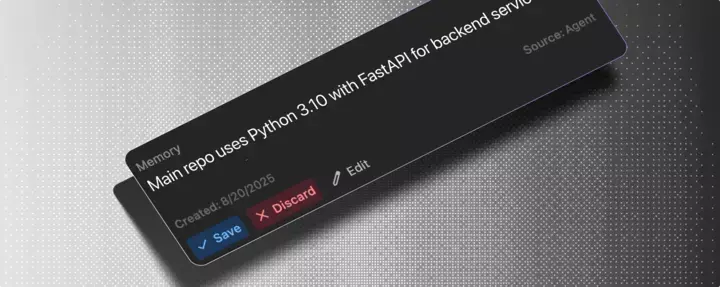
Augment Code has introduced a new feature called Agent Memory Review, which allows users to curate and control the memories their AI agents save during interactions. Announced on their website, this feature enables users to review, edit, and curate memories directly in the chat panel, enhancing the quality and relevance of the agent's long-term memory.
The Agent Memory Review feature is designed to help users manage unnecessary or low-quality memories that may accumulate over time. Users can now see a 'Pending Memory' button in the turn summary, allowing them to review new memories without leaving the chat. They can approve, edit, or discard these memories as needed, ensuring that only relevant information is retained.
This feature is particularly beneficial for power users who want to maintain the accuracy of their agent's memories and improve long-term memory quality for ongoing projects. It is available in VS Code version 0.542.0 and JetBrains version 0.280.0, providing a seamless experience for developers using these platforms.
Consider subscribing to one of our newsletters like Daily AI Brief or AI Programming Weekly.
Also, consider following us on social media:
Weekly news about AI tools for software engineers, AI enabled IDE's and much more.


 Tensordyne
This Tensordyne whitepaper presents Napier, an inference-focused AI processor and rack-scale system based on the company’s TDN Math logarithmic number system. It examines infrastructure requirements for large mixture-of-experts and agentic models, compares major inference architecture approaches, and details the TDN AIP processor, TDN72 pod, TDN Link fabric, and Napier Ultra configuration. The paper reports simulation-based performance, cost, and accuracy-validation results, including Tensordyne’s projected comparison of one Napier rack with a nine-rack Nvidia Rubin plus Groq deployment; the chip is reported as taped out and in fabrication.
Read moreDaily AI Brief: the AI news that matters, in your inbox.