Paul Christiano Named 2026 Hinton Lectures Lecturer
Oct 05, 2026
People & Leadership
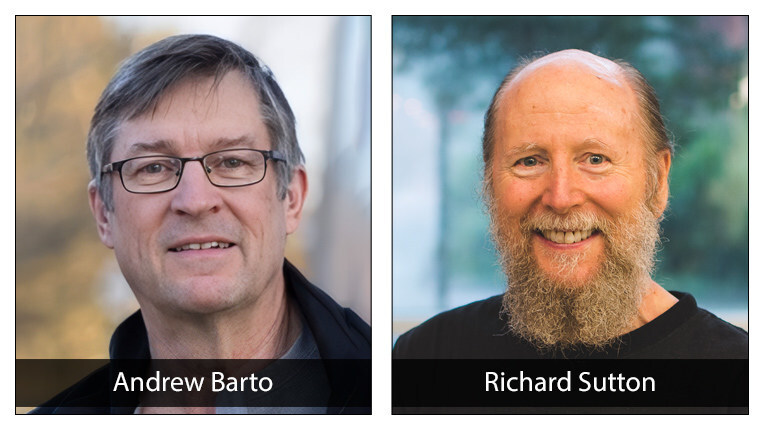
Andrew G. Barto and Richard S. Sutton have been awarded the 2024 ACM A.M. Turing Award for their pioneering work in reinforcement learning, announced in a press release. This prestigious award, often referred to as the "Nobel Prize for Computing," recognizes their contributions to the conceptual and algorithmic foundations of reinforcement learning.
Barto, a Professor Emeritus at the University of Massachusetts Amherst, and Sutton, a Professor at the University of Alberta, began their collaboration in the 1980s. They introduced key ideas and algorithms, including temporal difference learning, which have become fundamental to the field of reinforcement learning. Their work has significantly influenced the development of intelligent systems that learn through a reward-based trial-and-error approach.
The Turing Award, named after British mathematician Alan Turing, comes with a $1 million prize supported by Google. Reinforcement learning has been instrumental in various AI advancements, such as Google's DeepMind's AlphaGo, which defeated top human players in the game of Go. Barto and Sutton's textbook, "Reinforcement Learning: An Introduction," remains a seminal reference in the field, inspiring ongoing research and development in AI.
Consider subscribing to one of our newsletters like Daily AI Brief.
Also, consider following us on social media:
Daily report covering major AI developments and industry news, with both top stories and complete market updates


 Tensordyne
This Tensordyne whitepaper presents Napier, an inference-focused AI processor and rack-scale system based on the company’s TDN Math logarithmic number system. It examines infrastructure requirements for large mixture-of-experts and agentic models, compares major inference architecture approaches, and details the TDN AIP processor, TDN72 pod, TDN Link fabric, and Napier Ultra configuration. The paper reports simulation-based performance, cost, and accuracy-validation results, including Tensordyne’s projected comparison of one Napier rack with a nine-rack Nvidia Rubin plus Groq deployment; the chip is reported as taped out and in fabrication.
Read moreDaily AI Brief: the AI news that matters, in your inbox.