pgEdge Launches Starfleet Postgres Cloud Platform
Sep 28, 2026
Cloud AI
ClickHouse has raised $400 million in Series D funding led by Dragoneer Investment Group, with participation from GIC, Index Ventures, Khosla Ventures, Lightspeed Venture Partners, T. Rowe Price, and WCM Investment Management, announced in a press release. The round values the company at $15 billion and follows a year of over 250% annual recurring revenue growth and a customer base exceeding 3,000 organizations using ClickHouse Cloud.
Alongside the funding, ClickHouse acquired Langfuse, an open-source platform for monitoring large language models. Langfuse helps developers trace, debug, and evaluate AI application performance and was originally built on ClickHouse’s database. Following the acquisition, ClickHouse plans to deepen integration between the two products to strengthen its position in AI observability.
ClickHouse also introduced a managed Postgres service designed to complement its analytics platform. The service, built with Ubicloud, enables developers to handle both transactional and analytical workloads within a unified data stack. Users can sync Postgres data to ClickHouse for real-time analytics, allowing AI applications to span transactions and analytics without maintaining separate systems.
The company stated that these initiatives mark an expansion of its platform capabilities, combining analytics, AI observability, and transactional data management under one ecosystem.
Consider subscribing to one of our newsletters like AI Funding Brief or Daily AI Brief.
Also, consider following us on social media:

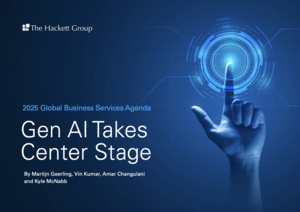
This industry analysis by The Hackett Group explores the transformative impact of generative artificial intelligence (Gen AI) on global business services (GBS) in 2025. The study highlights the shift from exploration to acceleration of Gen AI initiatives, with 89% of executives advancing these projects to improve customer satisfaction, innovate products, and reduce costs. The report also discusses the challenges and strategies for successful Gen AI adoption, emphasizing the need for a technology-enabled operating model and the importance of reskilling the workforce.
Read moreDaily AI Brief: the AI news that matters, in your inbox.