Frore Systems Introduces LiquidJet Diamond Coldplate for AI GPUs
Oct 09, 2026
Cooling
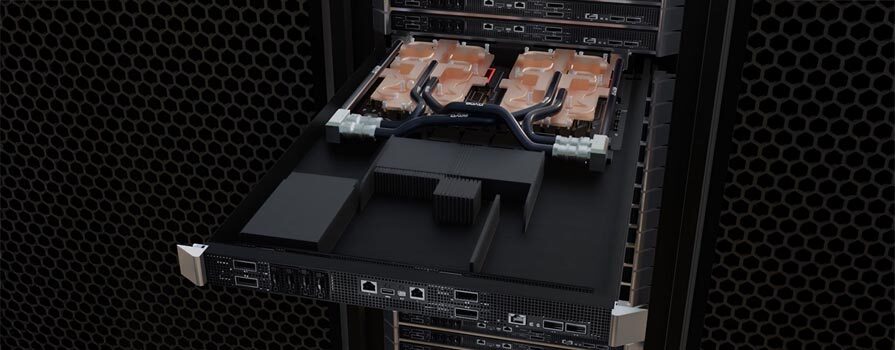
Boyd has announced the delivery of five million liquid cold plates to hyperscalers, a significant milestone in advancing AI data center cooling technology, according to BusinessWire. These liquid cold plates are essential for cooling modern AI processors, including GPUs and CPUs, by removing heat efficiently.
Boyd's liquid cold plates are designed to maximize cooling capacity through complex internal surface areas. They are connected to manifolds with quick disconnects, forming a liquid cooling loop that is custom-designed to cool multiple processors on a board. This design ensures high performance and reliability, crucial for hyperscaler, colocation, and enterprise data centers.
The company manufactures these cooling solutions at scale in its global facilities, with regional availability in North America, Europe, and Asia Pacific. This strategic distribution minimizes time-to-market and logistics costs for customers, ensuring efficient delivery and installation of cooling systems.
Consider subscribing to one of our newsletters like Silicon Brief or Daily AI Brief.
Also, consider following us on social media:
Weekly coverage of AI hardware developments including chips, GPUs, cloud platforms, and data center technology.


 Tensordyne
This Tensordyne whitepaper presents Napier, an inference-focused AI processor and rack-scale system based on the company’s TDN Math logarithmic number system. It examines infrastructure requirements for large mixture-of-experts and agentic models, compares major inference architecture approaches, and details the TDN AIP processor, TDN72 pod, TDN Link fabric, and Napier Ultra configuration. The paper reports simulation-based performance, cost, and accuracy-validation results, including Tensordyne’s projected comparison of one Napier rack with a nine-rack Nvidia Rubin plus Groq deployment; the chip is reported as taped out and in fabrication.
Read moreDaily AI Brief: the AI news that matters, in your inbox.