ITRI Unveils 3.2 Tbps Silicon Photonics Optical Engine
Sep 22, 2026
Chips
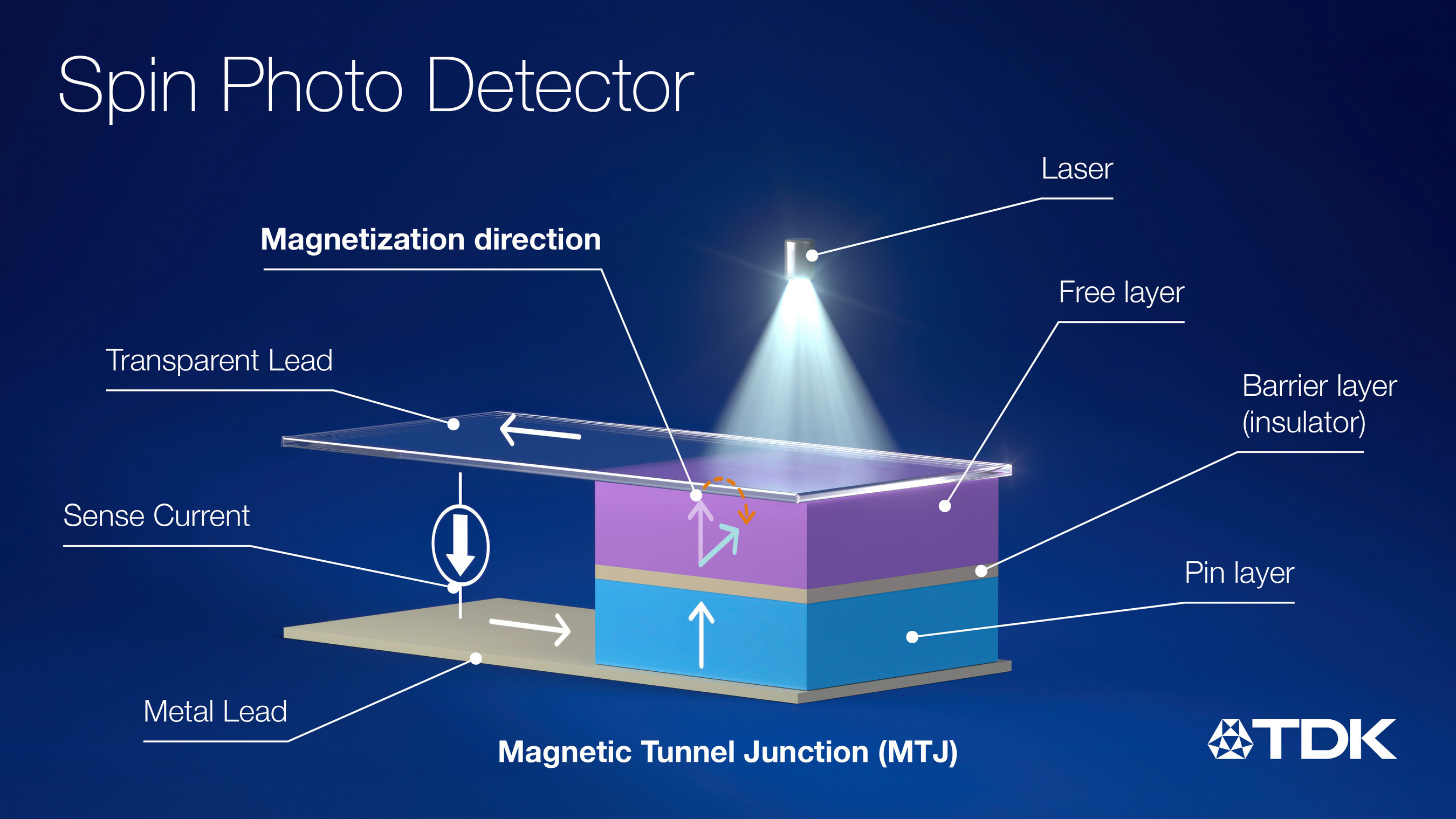
TDK Corporation has introduced the world's first Spin Photo Detector, capable of achieving data transmission speeds 10 times faster than conventional semiconductor-based photo detectors, announced in a press release. Developed in collaboration with Nihon University, this innovative device combines optical, electronic, and magnetic elements to respond at ultra-high speeds of 20 picoseconds using light with an 800 nm wavelength.
The Spin Photo Detector is designed to enhance data processing speed and reduce power consumption, which are critical for advancing AI applications. It operates effectively across a wide wavelength range, from visible light to near-infrared, and can be applied in fields such as optical communication and AR/VR technologies. TDK's adaptation of magnetic tunnel junction technology allows the device to function without the need for crystal growth on a single crystal substrate, offering flexibility in its application.
This breakthrough is expected to play a significant role in the evolution of AI by facilitating faster and more efficient data transfer, addressing the growing demand for high-speed optical communication in AI systems.
Consider subscribing to one of our newsletters like Silicon Brief or Daily AI Brief.
Also, consider following us on social media:
Weekly coverage of AI hardware developments including chips, GPUs, cloud platforms, and data center technology.

.png)
 Thomson Reuters
This report by Thomson Reuters explores the integration and impact of generative AI technologies, such as ChatGPT and Microsoft Copilot, within the professional services sector. It highlights the growing adoption of GenAI tools across industries like legal, tax, accounting, and government, and discusses the challenges and opportunities these technologies present. The report also examines professionals' perceptions of GenAI and the need for strategic integration to maximize its value.
Read moreDaily AI Brief: the AI news that matters, in your inbox.