Skydio Unveils F10 Fixed Wing Drone and Command Software
Sep 25, 2026
Autonomous Vehicles
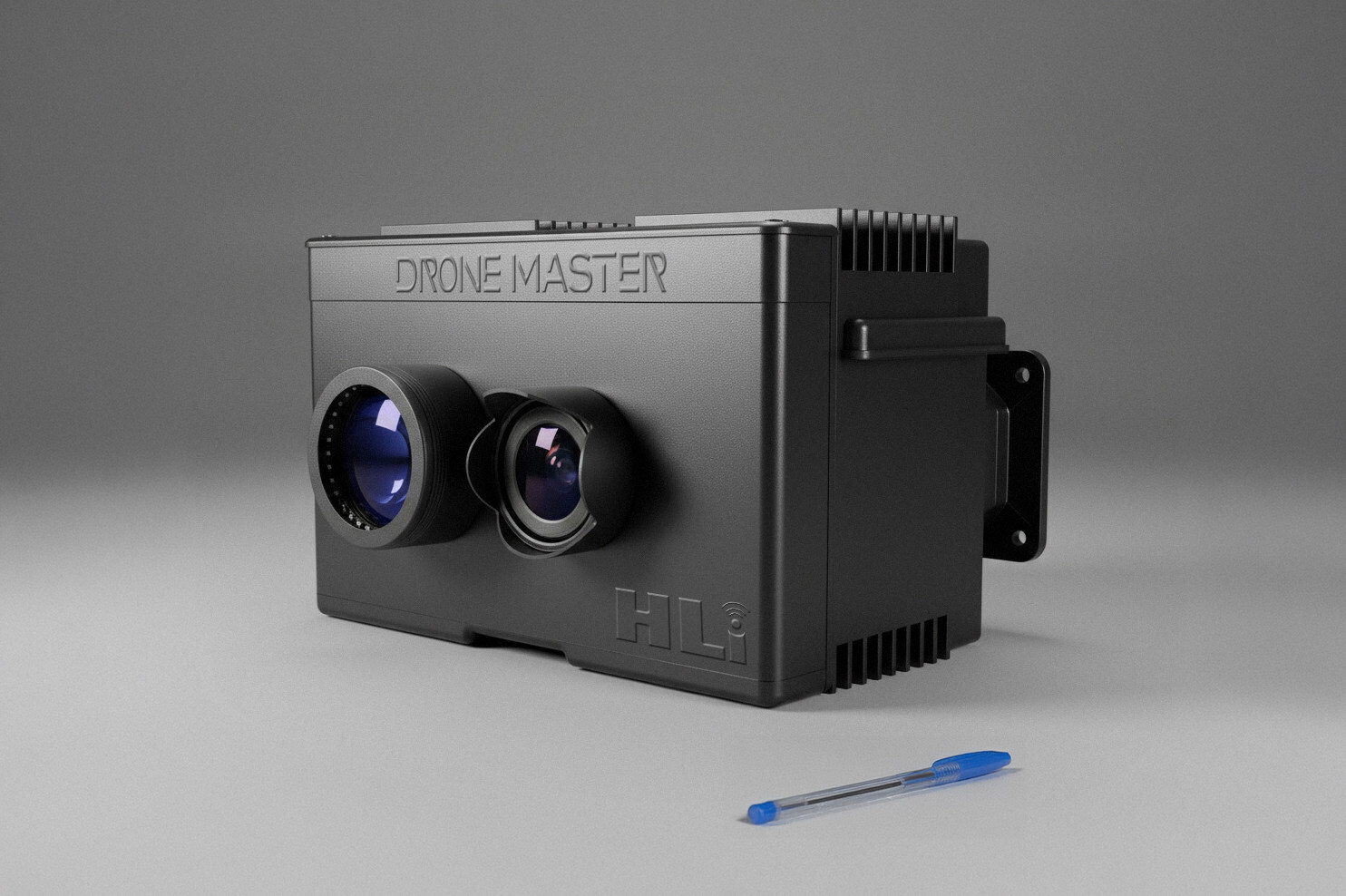
David S. Hall, the inventor behind lidar for autonomous vehicles and founder of Velodyne Lidar, has introduced Cam-Lidar, a new high-speed aerial detection system, announced in a press release. The technology is the first product from Hall Lidar Inc., a Montana-based company Hall established earlier this year.
Cam-Lidar integrates lidar, camera optics, and artificial intelligence to detect and track aerial objects such as drones at distances up to two kilometers. The system synchronizes lidar and camera feeds at 60 frames per second, providing real-time spatial visualization and predictive tracking. It can identify objects as small as a laptop moving at speeds near Mach 1.
The technology is designed to work alongside Hall’s proprietary magnetic electrical launch (MEL) system, which can deploy net-based drone capture tools multiple times per second. Together, the systems aim to deliver rapid, precise, and cost-effective drone neutralization for security applications including airports, energy facilities, and military bases.
Hall Lidar has developed a working Cam-Lidar prototype and is now accepting early orders and demonstration appointments from commercial and government partners.
Consider subscribing to one of our newsletters like Defense AI Brief or Daily AI Brief.
Also, consider following us on social media:
Your weekly intelligence briefing on the technology shaping modern warfare and national security.


 Tensordyne
This Tensordyne whitepaper presents Napier, an inference-focused AI processor and rack-scale system based on the company’s TDN Math logarithmic number system. It examines infrastructure requirements for large mixture-of-experts and agentic models, compares major inference architecture approaches, and details the TDN AIP processor, TDN72 pod, TDN Link fabric, and Napier Ultra configuration. The paper reports simulation-based performance, cost, and accuracy-validation results, including Tensordyne’s projected comparison of one Napier rack with a nine-rack Nvidia Rubin plus Groq deployment; the chip is reported as taped out and in fabrication.
Read moreDaily AI Brief: the AI news that matters, in your inbox.